Overview
If you love books and enjoy fixing grammar, shaping stories, and helping writers sound better, you may wonder how to become a book editor in 2026. The good news is that this career is more open than ever. You can work with authors, publishing houses, or even build your own freelance editing business from home. The publishing world keeps growing every year. Self-published authors need editors. Traditional publishers need fresh talent. Even writers of kids’ books look for skilled editors who understand young readers. If you enjoy reading closely and improving writing, editing can become a rewarding career. In this guide, you will learn how to start, what skills matter, which tools editors use today, and how to land real book editor jobs in 2026.
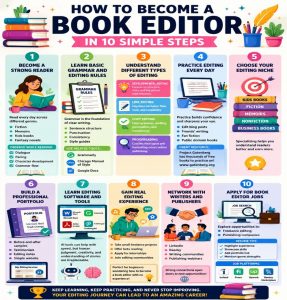
How to Become a Book Editor in 2026
Step 1: Become a Strong Reader
Every great editor starts as a strong reader. Editors learn storytelling skills by reading books regularly and paying attention to how professional authors write.
Try reading different genres such as:
- Fiction
- Memoirs
- Kids books
- Fantasy novels
- Business books
- Mystery stories
Books like Harry Potter and the Sorcerer’s Stone and The Hunger Games are excellent examples because they show strong pacing, memorable dialogue, and clear storytelling.
While reading, do not only focus on the story. Study how the book is written. Professional editors usually observe:
- Dialogue flow
- Chapter pacing
- Character development
- Grammar flow
- Emotional impact
- Scene transitions
For example, notice how suspense builds slowly in The Hunger Games or how characters develop naturally throughout the Harry Potter series. Reading with an editor’s mindset helps you understand why some books keep readers engaged from beginning to end.
The more books you study, the stronger your editing instincts become.
Step 2: Learn Basic Grammar and Editing Rules
Strong grammar skills are essential if you want to become a professional editor. Writers depend on editors to catch mistakes that readers may notice immediately.
You should understand:
- Sentence structure
- Punctuation
- Word usage
- Spelling rules
- Writing consistency
- Paragraph organization
Good grammar improves readability and helps books sound polished and professional.
Editors also learn style rules used in book publishing. Different publishers may follow different editing standards, so understanding style guides is important.
Helpful tools include:
- Grammarly
- Google Docs
- Chicago Manual of Style
- Microsoft Word Track Changes
For example, editors use the Chicago Manual of Style for book publishing because it explains formatting, punctuation, citations, and grammar standards clearly. Learning grammar does not happen overnight. The key is steady practice and regular reading.
Step 3: Understand Different Types of Editing
Many beginners think editing only means fixing grammar mistakes. In reality, book editing includes several different stages. Understanding these editing types helps you decide which area fits your skills best.
Developmental Editing
Developmental editing focuses on the big picture of a manuscript. Editors improve story structure, pacing, character development, and overall organization.
For example, a developmental editor may suggest removing slow chapters or strengthening weak character arcs in a novel.
Line Editing
Line editing improves sentence flow, tone, and readability. The editor focuses on how the book writing sounds to readers.
For example, they may rewrite awkward sentences or improve repetitive wording.
Copy Editing
Copy editing focuses on grammar, spelling, punctuation, and consistency.
A copy editor checks things like:
- Incorrect punctuation
- Grammar mistakes
- Repeated words
- Timeline consistency
Proofreading
Proofreading is the final stage before publishing. Proofreaders catch small mistakes missed during earlier editing rounds.
For example, they may fix typos, spacing problems, or formatting errors before printing.
Understanding these editing stages helps you become more professional and organized as an editor.
Step 4: Practice Editing Every Day
Editing is a skill that improves through daily practice. Even experienced editors continue learning with every project they complete.
Beginners can practice by editing:
- Blog posts
- Friends’ writing
- Student assignments
- Fan fiction stories
- Online articles
- Public domain books
A great resource for practice is Project Gutenberg. It offers thousands of free classic books that you can study and edit for practice. You can also compare your edits with professionally published versions to understand how experienced editors improve readability and structure. Daily editing practice helps you develop attention to detail and confidence.
Step 5: Choose Your Editing Niche
As you gain experience, it helps to choose a specific editing niche. Editors who specialize in certain genres often attract more clients and build stronger reputations.
Popular editing niches include:
- Kids books
- Fiction novels
- Memoirs
- Nonfiction books
- Business books
- Romance novels
- Fantasy stories
For example, editors who work on kids books must understand age-appropriate language and shorter sentence structures. Business book editors focus more on clarity, organization, and practical advice. Specializing in one area allows you to understand reader expectations more deeply. This can also increase your earning potential over time.
Step 6: Build a Professional Portfolio
A strong portfolio helps clients trust your editing skills. Even beginner editors can create simple portfolios that showcase their abilities.
Your portfolio may include:
- Before-and-after editing samples
- Editing notes
- Client testimonials
- Sample manuscript feedback
- Genre specialties
You should also create a simple website or LinkedIn profile where clients can learn about your services and experience. A portfolio does not need to look fancy. Clear examples of your editing work matter much more than complicated design.
Step 7: Learn Editing Software and Tools
Modern publishing relies heavily on digital tools. Editors now work online more than ever before, especially freelancers.
Professional editors commonly use:
- Microsoft Word Track Changes
- Grammarly
- Adobe Acrobat
- Google Docs
- ProWritingAid
These tools help editors review manuscripts, leave comments, and track revisions efficiently. AI editing assistants have also become more common in 2026. They can help spot grammar mistakes and improve speed. However, human editors still play the most important role. AI cannot fully understand emotional storytelling, humor, pacing, or character depth the way professional editors can. Technology supports editing, but human creativity remains essential.
Step 8: Gain Real Editing Experience
One of the biggest questions beginners ask is how to become a book editor with no experience. The answer is simple: start small and gain experience gradually.
You can begin by:
- Taking small freelance projects
- Offering beta reading services
- Editing for friends
- Joining online writing communities
- Applying for internships
- Working with self-published authors
Even small projects help you improve your editing skills and build confidence. Many successful editors started by editing short blog posts or helping beginner writers online before moving into professional book editing. Every project teaches you something valuable.
Step 9: Network With Writers and Publishers
Networking plays a huge role in the publishing industry. Many editing opportunities come through recommendations and professional relationships. Try connecting with writers and publishers through:
- Reedsy
- Writing communities
- Publishing webinars
- Online workshops
- Author groups
Joining writing communities also helps you stay updated with publishing trends and editing opportunities. Good relationships often lead to repeat clients and long-term editing work.
Step 10: Apply for Book Editor Jobs
Once you build experience and confidence, start applying for real book editor jobs. Some editors work freelance, while others join publishing companies full-time. You can search for opportunities on platforms like:
- Indeed
- Fiverr
- Upwork
- Reedsy Marketplace
If you want to work for a publishing company, focus on building a professional resume that highlights:
- Editing experience
- Writing projects
- Software skills
- Portfolio samples
- Genre specialties
Freelance editors should also create professional service pages and client reviews to attract authors online. Remember that building an editing career takes time. Some editors find clients quickly, while others grow slowly through networking and consistent practice. The key is to stay patient, keep learning, and continue improving your editing skills with every project.
How to Become a Book Editor With No Experience
Many beginners ask how to become a book editor with no experience. This is one of the biggest fears for new editors. Every professional started from zero at some point.
You can gain experience faster than you think.
Start With Practice Projects
Edit:
- Your own writing
- Friends’ stories
- Student papers
- Online blog posts
- Fan fiction communities
Practice helps you develop an editor’s eye.
Use Public Domain Books
Download classic books from Project Gutenberg and practice editing chapters. Compare your edits with published versions.
Join Writing Communities
Online groups often look for beta readers and beginner editors. This helps you build confidence.
Create a Portfolio
A simple portfolio matters more than many people realize. Include:
- Before-and-after editing samples
- Testimonials
- Short editing notes
- Genre specialties
When clients see your work clearly, they trust you faster.
How to Become a Book Editor Without a Degree
A common question today is how to become a book editor without a degree. The truth is simple. Many successful editors never studied publishing in college. Publishers care more about skill than diplomas. You can become an editor without a degree if you:
- Write well
- Understand grammar
- Communicate clearly
- Meet deadlines
- Know storytelling basics
Some editors learn through online courses instead of university programs.
Learn Editing Through Online Resources
Helpful platforms include:
These platforms teach developmental editing, proofreading, and manuscript editing. If you want to know what degree do you need to be a book editor, the answer is that no single degree is required. However, degrees in English, journalism, communications, or creative writing can help. Still, strong editing skills matter most.
How to Become a Freelance Book Editor
Learning how to become a freelance book editor gives you freedom and flexibility. Many editors now work remotely with authors worldwide.
Freelance editing keeps growing because self-publishing continues to expand.
Books published through Amazon Kindle Direct Publishing often require freelance editors before release.
Build Your Brand
Create:
- A simple website
- A professional LinkedIn profile
- Editing service pages
- Client reviews
Choose Your Niche
You may specialize in:
- Fiction
- Nonfiction
- Memoirs
- Business books
- Kids books
Editors who specialize often earn more.
Set Your Rates Carefully
Beginner editors may charge lower rates first. Experienced editors charge per word, hour, or project.
Find Freelance Clients
Look on:
How to Become an Editor for a Publishing Company
Traditional publishing still offers stable careers. Many people want to know how to become an editor for a publishing company because they enjoy working with professional teams.
Large publishers include:
Start With Entry-Level Roles
Many editors begin as:
- Editorial assistants
- Proofreaders
- Interns
- Manuscript readers
Learn Publishing Software
Publishing houses use project systems and style guides daily.
Understand Market Trends
Editors must know which genres sell well.
For example, fantasy novels and emotional memoirs remain strong categories in 2026.
Build Industry Connections
Attend publishing webinars and writing conferences whenever possible. This is often the smartest path for becoming an editor for a publishing company.
Common Mistakes New Editors Make
New editors often face similar challenges when starting their careers. These mistakes are normal in the beginning, but learning about them early can help you grow faster and build a stronger reputation in the publishing industry.
1. Overediting
One of the biggest mistakes new editors make is changing too much. Good editing should improve the writing without removing the author’s natural voice and personality. For example, if an author writes in a funny or emotional style, the editor should not make the writing sound cold or overly formal. Readers connect with the writer’s unique tone, and removing that voice can weaken the book. Professional editors know when to fix a sentence and when to leave it alone. The goal is to improve clarity while keeping the story authentic.
2. Ignoring Genre Rules
Every genre has different reader expectations. A thriller needs suspense and fast pacing, while romance novels focus more on emotional connection and relationships. New editors sometimes apply the same editing style to every book. This can create problems for the writer and the reader.
For example:
- Kids books need simple language and shorter sentences
- Fantasy novels often include detailed world-building
- Memoirs should feel personal and emotional
- Business books need a clear structure and practical advice
Understanding genre expectations helps editors make smarter editing decisions.
-
Rushing Through Projects
Editing takes patience and focus. Many beginners rush through manuscripts because they want to finish quickly or take on too many clients at once. Fast editing often leads to missed grammar mistakes, weak feedback, and inconsistent corrections. Authors notice when an editor works carelessly. Professional editors take time to:
- Read carefully
- Review chapters more than once
- Check consistency
- Leave thoughtful comments
Quality matters much more than speed in professional publishing.
-
Charging Too Little Forever
Many beginner editors start with low prices to attract clients. That is normal in the beginning. However, some editors continue charging very low rates even after gaining experience. Low pricing can lead to burnout and make clients undervalue your work. Editing requires time, skill, and concentration. As your experience grows, your rates should grow too. Editors with strong portfolios and positive reviews deserve fair payment for their expertise.
-
Skipping Contracts
Some new freelance editors begin projects without written agreements. This can create confusion later about deadlines, revisions, pricing, or project expectations. A simple contract protects both the editor and the client. It should clearly explain:
- Payment terms
- Editing deadlines
- Scope of work
- Revision limits
- Cancellation policies
Professional editors treat editing like a real business, and contracts help build trust and professionalism from the start.
Tools Professional Editors Use in 2026
Editors now combine traditional skills with digital tools. Popular tools include:
- Microsoft Word
- Grammarly
- ProWritingAid
- Google Docs
- Scrivener
Still, tools only support the process. Strong human judgment remains the real skill.
Stop Stressing Over Editing — Let Books Publishing Inc Perfect Your Book Today!
Editing can feel overwhelming, especially after spending months writing your manuscript. Small grammar mistakes, weak sentence flow, and unclear structure can affect the quality of your book. That is where Books Publishing Inc can help. Our professional editors carefully review your manuscript to improve clarity, readability, grammar, pacing, and overall flow while keeping your unique voice intact. Whether you wrote a novel, memoir, business book, or kids’ book, our editing team is ready to polish your work professionally. Instead of stressing over every sentence, let Books Publishing Inc turn your manuscript into a book readers will truly enjoy.
Final Thoughts
Learning how to become a book editor takes patience, practice, and curiosity. You do not need a perfect degree or years of experience to begin. Strong reading habits, editing practice, and consistent learning matter far more. Some editors work for publishers. Others build successful freelance careers from home. Both paths can lead to rewarding opportunities in 2026. Whether you want to edit novels, memoirs, or kids’ books, the publishing world still needs talented editors who understand storytelling and language. If you stay committed and keep improving your skills, you can absolutely succeed in learning how to become a book editor.
Frequently Asked Questions
How do I become a book editor in 2026?
Start by improving your grammar, reading regularly, and practicing editing daily. Build a portfolio, work with small clients, and apply for editing opportunities online.
What qualifications do I need to become a book editor?
Strong grammar, communication skills, attention to detail, and editing experience matter most. Some employers prefer English or journalism degrees, but they are not always required.
Can I become a book editor without a degree?
Yes. Many successful editors build careers through experience, online courses, and freelance work instead of formal education.
What skills are required for professional book editing?
Editors need grammar knowledge, storytelling understanding, time management, communication skills, and familiarity with editing software.
How much do book editors earn in 2026?
Freelance editors earn depending on experience and specialization. Full-time publishing editors often earn annual salaries between $45,000 and $90,000.